Monday, March 30, 2015

MYST #2: The Wolf of Wall Street


The Wolf of Wall Street is not a movie for everyone. WARNING THERE WILL BE SPOILERS so if you have not seen the movie and would like to don't read this. This movie is also rated R and it is rated that for good reason because it has curse words almost every sentence as well as nudity through most of the movie also including people using tons of different drugs at will.

The movie starts with Leonardo DiCaprio throwing a short person at a target saying that he will give the first person to hit a bulls eye ten thousand dollars. From there it goes to DiCaprio speaking over different acts that he will do over the days showing off all of the drugs he does on a daily basis. It then goes into all of the different estates and things that he owns.        


From there it goes on to Jordan Belfort (DiCaprio) explaining how he got his start into the stock broker business. From there it goes to his first day at the first broker company he worked at where we meet Matthew McConaughey's Character. His character is Belfort's first boss on Wall Street. From there we go into the first problem of the movie when McConaughey's broker firm falls through and closes down.

  After that it goes through Belfort trying to find a new job and he finds a new job at a penny stock firm. Which he realizes that he will make much more money scamming people into buying small amounts of expensive stocks and they then turn them onto the stocks that make them 50% of what the person pays for the stock in the random company. Though this isn't legal it is also very much frowned upon by the SEC.

When the FBI starts investigating Belfort he doesn't understand why and he hires a lawyer, and he starts asking him what his advice would be on dealing with the FBI. His lawyer advises him not to talk to the FBI at all and he doesn't listen to him. After he doesn't listen to his lawyer he invites the two FBI agents that are investigating Straton Oakmont (Belfort's Company) to his yacht.
        

From there he takes a trip to Europe but more specifically Switzerland. The reason he goes to Switzerland is for the banks to put his money in. The reason he goes to Switzerland for the banks is because they do not have the same laws as banks in the United States do so the can't seize money that was illegally made or solicited. From there the goes to the resolution of the whole movie where Belfort comes back to the States and gets himself in trouble and gets arrested for it.

Then the whole company of Straton Oakmont gets taken over and everything gets seized bye the FBI. From there Belfort needs to give the SEC information on everyone who works for Straton Oakmont and tries to deal with life in jail. He then gets put under house arrest and he is told he needs to pay back the people that he stole from and he does that by putting on clinics all around the world.      
 This is one of my favorite movies of all time.

This gets a 5 out of 5 cups of milk from me.

Friday, March 27, 2015

Formal Film Study: Mystery/Thriller Movies


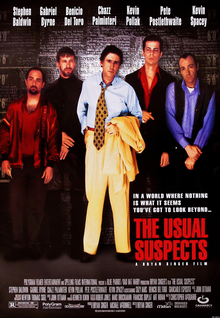
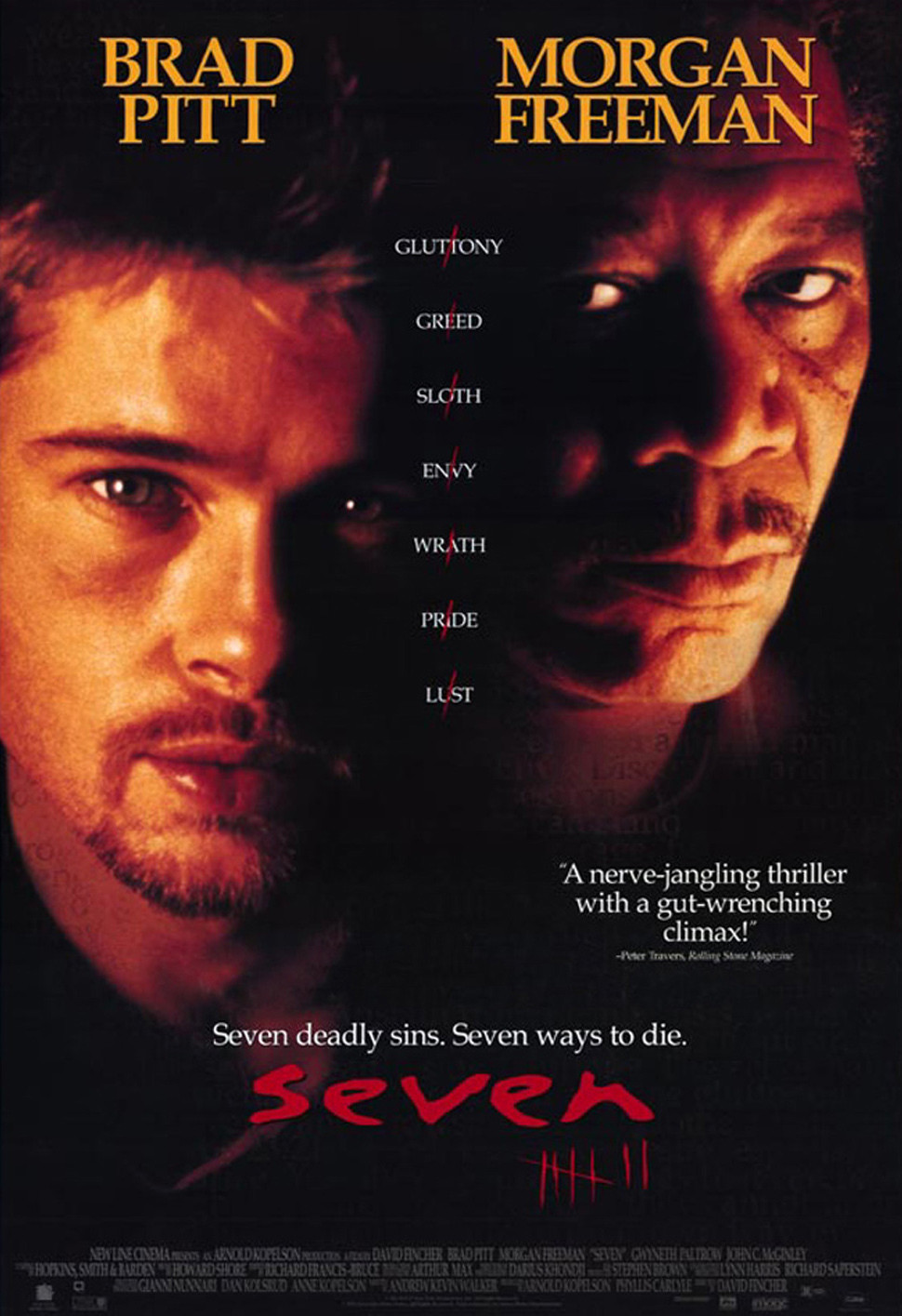
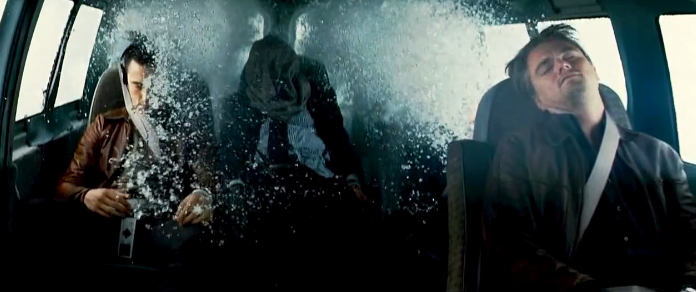
            Thriller is a genre of literature, film, and television programming that uses suspense, tension, and excitement as its main elements. Thrillers heavily stimulate the viewer's moods, giving them a high level of anticipation, ultra-heightened expectation, uncertainty, surprise, anxiety and terror. Films of this genre tend to be adrenaline-rushing, gritty, rousing and fast-paced. The directors of Mystery/Thrillers are usually very different in the way that they like to make their films differently. The sound in Thriller movies make and set the scene. The movies I saw were Se7en (1995), Inception (2010), and The Usual Suspects (1995).


Thrillers often overlap with mystery stories but are distinguished by the structure of their plots. In a thriller, the hero must stop the plans of an enemy rather than uncover a crime that has already happened. Mystery thrillers also occur on a much grander scale: the crimes that must be prevented are serial or mass murder, terrorism, assassination, or the overthrow of governments.

These three thrillers were not made during anything that would cause a spark politically.   Ancient epic poems such as the Epic of Gilgamesh, Homer's Odyssey and the Mahābhārata use similar narrative techniques as modern thrillers. In the Odyssey, the hero Odysseus makes a perilous voyage home after the Trojan War, battling extraordinary hardships in order to be reunited with his wife Penelope. He has to contend with villains such as the Cyclops, a one-eyed giant, and the Sirens, whose sweet singing lures sailors to their doom. The Odyssey could be considered one of the first thrillers.
seven movie brad pitt

The overarching discovery that I noticed was sound. Sound happened to be a major part in each of these movies that I watched because the movies mood reflects heavily on sound and it wouldn't be the same experience. Depending on the the sound people get different feelings due to the way that the music is placed into the movies sound. 

A smaller find that is pretty important to thriller movies is the fact that someone has a person that gets murdered. I also found that the people that are murdered usually has some sort of personal connection to the main character. The main character is also trying to figure out what happened to that close person or they are trying to get revenge on their killer. 

Critics find that thriller movies are "Riveting in a gut-twisting way, but I, myself, would not call it "entertaining." Though critics say that they're not "entertaining" I would completely disagree. Although critics have their own opinion so do I but it can't judge how someone else would like a movie that they haven't seen.     

Monday, March 2, 2015

1935 Movie: Lawless Rider


STUDIO: 20th Century Fox. Known for socially-conscious adventure films and “hokey cheesey ‘Americana’.” Worked with Ford and Wayne.   


CAST/CREW:
Director: John Ford
A well known Director working in the 30s, made a lot of westerns, frequently worked with John Wayne and worked with Bert Glennon on Stagecoach in 1939.


Cinematographer: Bert Glennon
Received the Academy Award for Best Cinematography (Black & White) for Stagecoach in 1939


Actors: John Wayne, Alice Faye
John Wayne is a quintessential Western movie star that works with John Ford and Fox.
Faye also worked with Fox and was considered very popular and attractive.


GENRE:
Western. Audience familiarity. Escapism from the 30s. Cultural critique against banks/wealth.
The idea of the rugged individual can comfort the poor conditions of the great depression. The themes of justice are of interest to a bank-hating public.


SYNOPSIS:
The movie begins with Charles (Wayne) and a group of five rugged bandits looking upon a fairly large mansion on a grassy knoll. As conversation begins to develop, it is learned that the group is there to ransack the mansion for all it’s worth, and it appears that Charles is the ringleader for tonight. Charles explains that the rich couple that owns the house is out for the night, and won’t be back until late in the evening. After a few more gloss overs of the plan, the band separates to get in through the three different entrances, each man at an entrance carefully picking a door open. Once the men are in the building, all is well, until Charles discovers a girl cowering in her closet in one of the upstairs bedrooms. Charles quickly notices that the girl has made a phone call and assumes that it was to the police; seconds later, law enforcement has arrived, and, not yet spotted, Wayne snatches the girl and bolts out of the building, riding off into the night on horseback. It is explained that the girl’s name is Margaret, (Faye) and Charles says the intention of the kidnapping was for some sort of ransom. He explains that he’s not going home without any money. After several escape attempts by Margaret, the two are attacked by a group of bandits looking for loot. Charles ends up fighting them off, and becomes a sort of protector to Margaret, no longer seeing her as a tool for money. As the relationship between the two grows as they continue journeying, Margaret expresses her desire to live in Sacramento. Charles agrees, and after a long and arduous journey, is met with law enforcement officials who know his face. After a solitary respite in a town shop, Margaret is alerted to the sound of gunshots. As she runs outside, she finds Charles dead on the ground, having killed two officers before being gunned down. *Note: it is never made clear whether Margaret loves Charles back or not, just that the hostility fades and she’s complacent with being with him/enjoys his company. It is possible that she loves him, but that’s up to viewer speculation.


HAYS CODE:
Considering the movie follows an anti-hero turned hero, it’s fairly hard to make judgement calls on what’s appropriate and what’s not. However, our character is initially portrayed as a morally detestable person, one that audiences will struggle to support or relate with. Until the point where Charles begins his change of character, the actions prevented are frowned upon, due to the law winning in the end over the bandits.  As the relationship between Charles and Margaret develops and the audience begins to identify with Charles, his actions will have the audience rooting for good causes, like protecting someone special. However, in order to make the movie a real moral tale, Charles death informs the audience that a life of crime doesn’t just fade away, no matter how much you do to wipe it clean. Charles will always be an enemy in the eyes of the law: his actions have already defined him.


TECHNOLOGY:
Black and White film. Common for 30s Westerns. Stagecoach was black and white and was made in 1939… received award for best cinematography.